
Does not Commute
MediocreRacing
3.96.95K Reviews
- Version
- 1.5.5
- Installs
- 10.00M
- Age Rating
- Everyone
Screenshots

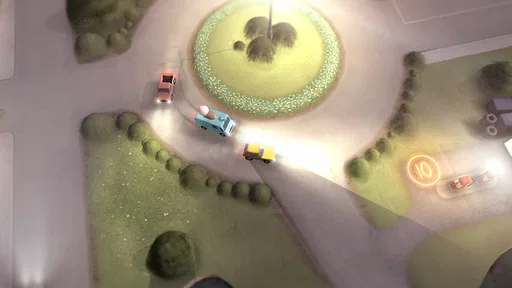


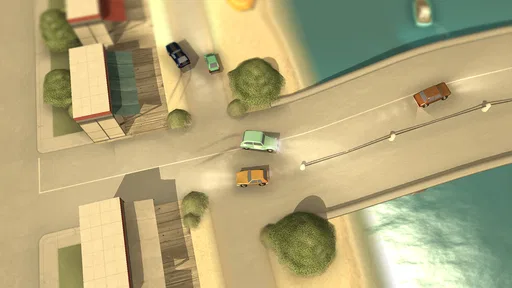

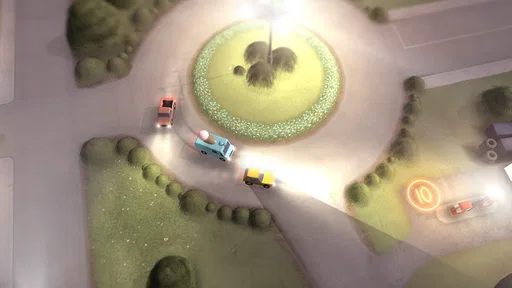
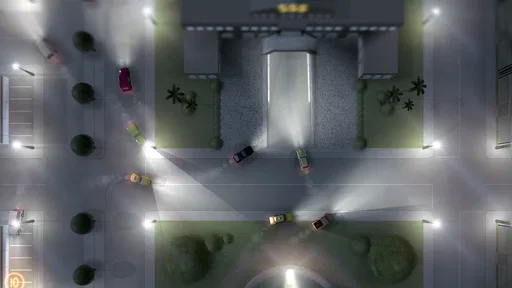
Our Review of Does not Commute
 Analysis by Appyee
Does not Commute is the kind of racing game that looks simple for a few seconds and then quietly takes over your attention. I expected short driving challenges, but its real hook is the way every run changes the next one. You guide a vehicle through a compact town, then your previous route returns as another moving car while you handle the next trip. The result is part racing, part planning, and part damage control.
That unusual structure is why I kept coming back during my first sessions. It is not a conventional race against a field of opponents, and it is not a relaxed driving simulator either. The developer, Mediocre, built something that rewards careful routes more than raw speed. It is free to start, rated for Everyone, and sits in the racing category, but its appeal reaches beyond people who normally play racing games.
After spending time with it, my opinion is positive but not uncritical. The first week is very easy to enjoy because each attempt teaches you something immediately. The harder question is whether it deserves a permanent place on your phone once the surprise wears off. For me, the answer depends on whether you enjoy improving a shared route and managing small mistakes, rather than simply chasing faster lap times.
Why the first sessions feel so fresh
The opening idea is wonderfully clear. You drive one car to its destination, and that completed journey becomes part of the traffic when you start another. Soon, the town contains your earlier decisions: a turn taken too sharply, a pause in the road, a reckless shortcut, or a car left in an awkward position. You are not merely replaying a level. You are building the conditions that make the next attempt easier or harder.
This creates a satisfying chain of consequences. On the first trip, I could concentrate on reaching the target. On the next, I had to remember where my earlier vehicle would appear and avoid creating a new obstruction. A route that felt harmless in isolation could become troublesome when several previous drives were active at once. That is the central pleasure of the game: ordinary driving choices gain importance because they remain relevant.
The controls are approachable enough for quick play, which suits the game’s mobile design. I could pick it up while waiting for something without needing a long tutorial or a complicated setup. Yet the simplicity does not make the driving mindless. Steering, braking, and timing still matter, especially when the streets become crowded with the echoes of earlier runs.
One of my most useful early discoveries was that speed is often the wrong priority. Arriving quickly feels natural in a racing game, but aggressive driving can leave a route that is difficult to repeat safely. A slower, cleaner first journey can save far more time later. I began treating the first car as a piece of infrastructure rather than a disposable attempt, which made the whole town easier to manage.
The game also works well in short bursts because a single decision can provide a complete mini-goal. I might try to rescue a difficult route, reach one destination without causing trouble, or simply understand why a particular street had become chaotic. That makes it a good companion for a commute or a short break. It does not demand the uninterrupted concentration of a long console race.
The clever trade-off between memory and improvisation
What makes the design more interesting than a normal time trial is the balance between remembering and reacting. You need to remember your own earlier behavior, but those previous cars do not always behave like perfectly predictable ghosts. As the town fills, I found myself watching the road rather than relying only on a mental replay. The best approach combines preparation with quick corrections.
This is also where the game feels personal. The traffic is not a collection of anonymous computer drivers following a fixed pattern. It reflects the choices I made moments earlier. If I drove carelessly, the game showed me the consequences. If I planned a clean line, that decision helped future attempts. That feedback loop gives each session a stronger sense of ownership than a standard collection of disconnected tracks.
For a newcomer, I recommend using the first few runs to learn the shape of the town instead of trying to complete everything efficiently. Notice which roads offer room to recover, where a stopped vehicle can cause trouble, and which destinations require a more cautious approach. This habit reduces frustration later because you stop treating every failure as bad luck.
The first-week appeal is therefore genuine. The concept is easy to explain, but it produces situations that feel different from ordinary racing games. I enjoyed discovering that the safest route was not always the shortest and that a small mistake could become a future obstacle. That novelty is strong enough to carry several sessions without needing extra decoration.
What keeps it useful after the novelty fades
The longer-term value comes from mastery rather than constant novelty. Once I understood the basic trick, the game stopped surprising me every minute. However, it continued to reward better habits. I started planning the order of my drives, choosing when to take risks, and thinking about how one vehicle would affect the next objective. That gives the experience a modest but meaningful strategic layer.
This is not the right game for someone who wants a large garage, endless customization, or a deep competitive ranking system. Its recurring value is more focused. You return because you want to solve the town more cleanly than before, not because you are collecting a huge range of racing content. If that kind of self-improvement feels satisfying, the structure can remain appealing well beyond the first sessions.
I also think it suits players who enjoy games that turn failure into information. A failed run is rarely just a lost attempt. It tells you which corner was too fast, which road became blocked, or which earlier decision created a chain reaction. I could usually identify a practical lesson after a mistake. That makes retries feel purposeful, provided I was willing to slow down and analyze what happened.
A useful everyday scenario is a short evening break. I might have only a few minutes, so I would play until one route became unstable, stop, and return later with a plan. Because the game’s challenge is based on managing a growing sequence of drives, even a brief session can advance my understanding. It does not require me to remember a long story or rebuild a complicated setup before playing.
On the other hand, the same structure limits its ability to become a daily habit for everyone. If you prefer racing games that deliver immediate speed, dramatic overtakes, or constant visual rewards, this can feel restrained. The tension is often quiet: positioning, timing, and avoiding your own earlier mistakes. I found that rewarding, but I understand why another player might call it repetitive.
How it compares with familiar racing games
Compared with arcade racers, this game is less about acceleration and spectacle. There is no need to memorize a boost pattern or fight a pack of rivals around a traditional circuit. Compared with driving simulators, it is much more playful and forgiving in its presentation, but it still asks you to respect space and momentum. Its closest competition is not really another racing title; it is any game that turns repeated attempts into a changing puzzle.
That distinction matters when deciding whether to install it. Someone looking for realistic vehicle handling should choose a simulation-focused alternative. Someone who wants a quick competitive race may be happier with a conventional arcade game. I would recommend this one to players who like unusual rules and enjoy seeing their own past actions become part of the challenge.
The game’s free price makes experimenting easy, although in-app purchases cost $2.99 per item. I would approach those purchases as optional conveniences rather than part of the reason to play. The core appeal is already present in the driving loop, and the design is strongest when I am learning to manage the town myself instead of trying to bypass every difficult moment.
Its broad age rating also makes it approachable for families and younger players, though the game may be more mentally demanding than its simple appearance suggests. A child can understand the controls quickly, but the consequences of careless driving require patience. I would describe it as easy to begin and harder to manage well, which is a good combination for a thoughtful casual game.
Where maintenance becomes part of the experience
There is no complicated maintenance routine in the usual sense. I did not need to manage a large collection of vehicles, tune detailed mechanical settings, or keep up with a long list of daily tasks. The main maintenance burden is mental: remembering which routes are safe, recognizing where the traffic has become troublesome, and deciding whether to repair a mistake or start over with a cleaner plan.
That burden is both the game’s strength and its main limitation. When I was in the right mood, maintaining a stable town felt like solving a puzzle I had created myself. When I was tired, the same responsibility felt like work. A conventional racer lets me forget a bad lap as soon as the next race begins. Here, earlier errors remain relevant, so I cannot always escape them by simply pressing restart.
My practical advice is to avoid turning every session into a rescue mission. If the traffic has become too chaotic and I am making decisions only to compensate for earlier mistakes, taking a fresh approach can be more enjoyable. The game rewards patience, but patience should not mean forcing an unpleasant run indefinitely.
It also helps to establish a personal rule for risky routes. I would use a cautious drive when I needed a vehicle to remain predictable, and save experimentation for a trip where a failure would not disrupt several later objectives. This separation between “setup” drives and “test” drives made the experience less frustrating. It is a small change, but it turns random-feeling trouble into deliberate risk management.
The current version is 1.5.5, and the game remains a compact experience rather than a constantly changing service. That is appealing if I want something stable to revisit, but it also means the long-term relationship depends mainly on whether the core loop continues to interest me. Players who need frequent fresh events or a steady stream of new systems may eventually look elsewhere.
The friction points that can cause fatigue
The biggest source of fatigue is repetition with consequences. Driving through the same general environment can feel satisfying when I am refining a solution, but less so when I am repeating early steps simply to reach the part that interests me. The game’s structure makes progress feel connected, yet that connection can also make experimentation expensive in time.
Another issue is that mistakes can compound. A small collision or poorly placed car may not seem serious at first, then become a major obstacle several drives later. I appreciate the consistency of that idea, but it can make the game feel harsher than its friendly presentation suggests. If you prefer clear resets and immediate feedback, this delayed punishment may test your patience.
The controls are simple, but simplicity does not eliminate the occasional feeling that a recovery was awkward. When several vehicles occupy the same area, the screen can demand quick judgment, and a minor misread can undo careful planning. I learned to leave more space than I initially thought necessary. That is a useful skill, although new players may need time to understand why a seemingly harmless move caused trouble later.
I would also skip this game if I wanted a strong social or competitive reason to return. Its most interesting opponent is my own previous performance. That creates a private, reflective challenge rather than a shared racing event. For some players, that is exactly the attraction; for others, it may make the experience feel isolated after the first burst of curiosity.
The audience size suggests that the concept has reached a substantial mobile audience, with over ten million installs and an average rating of 3.9 from around 173 thousand ratings. Those figures fit my impression: this is a distinctive game with clear fans, but not one that will satisfy every racing preference. The mixed reception makes sense because the design is unusual enough to divide players who expect a more traditional race.
Who should keep it installed?
I would keep it installed for anyone who enjoys thoughtful mobile games that can be played in short sessions but still develop a strategy over time. It is especially good for players who like turning mistakes into a plan. The most rewarding moments came when I finally understood that a route failed not because the game was unfair, but because I had created a bad condition several drives earlier.
It is also a good choice for people who want a racing game that feels different without becoming difficult to learn. The driving begins simply, while the deeper challenge comes from managing consequences. That combination makes it approachable for casual players and interesting for anyone willing to think beyond the current car.
I would skip it if your ideal racing session involves licensed vehicles, detailed customization, realistic physics, or head-to-head competition. I would also be cautious if repeated routes quickly bore you or if you dislike games where restarting is sometimes more sensible than repairing a messy attempt. In those cases, a conventional arcade racer will probably provide more immediate satisfaction.
For me, the lasting value is strongest when I treat it as a compact driving puzzle rather than a full racing career. I do not open it expecting a huge progression system. I open it when I want a clever problem that responds to my own choices. That narrower purpose is not a weakness, but it does define how often I want to play.
My long-term verdict
After the novelty fades, Does not Commute still has a reason to stay on a phone, but that reason is specific. Its time-shifted traffic system remains clever because it makes every drive matter beyond the moment. The game asks me to maintain a route, learn from my own behavior, and accept that careful preparation can be more valuable than speed.
I would not call it an endlessly replayable racing game for everyone. Its compact structure, repeated environments, and accumulating mistakes can become tiring, especially for players who want constant variety. Yet I think it earns recurring value through the quality of its central idea. Few mobile racers make me consider the future consequences of a turn I am taking right now.
Mediocre’s game is free, supports devices running Android 8.0 or later, and has been available since April 22, 2015. Those practical details make it easy to try, while its Everyone rating keeps the presentation broadly accessible. The important question is not whether it can provide a few entertaining minutes; it clearly can. The question is whether its deliberate pace and self-created traffic match your taste.
My recommendation is simple: install it if you like experimenting, planning, and improving a shared space one decision at a time. Give it a fair chance by driving cautiously during the early runs instead of treating every trip like a sprint. If the idea of meeting your own past mistakes sounds more interesting than overtaking computer rivals, it can remain a surprisingly good small habit.
If that sounds frustrating rather than intriguing, choose a more traditional racing game. But for players who want a clever change of pace, the real strength is its ability to turn your own history into the opposition. That is enough to keep it memorable, and for the right player, enough to keep it installed.
Verdict
Strengths of Does not Commute
- Creative time-loop driving concept with strategic route planning
- Short runs make it easy to enjoy during quick gaming sessions
- Distinctive retro-inspired visuals and atmospheric presentation
- Many vehicles and characters add variety to each attempt
- Works well for players who enjoy experimentation and replayability
Limitations of Does not Commute
- Later stages can feel demanding without careful planning
- Mistakes may force you to repeat sections of a route
- Some objectives are unclear until you experiment
- Progress can feel slow when unlocking additional content
- Touch controls may take time to master during busy traffic
Other Releases by Mediocre
View All
Smash Hit
Arcade4.5
Similar Picks in This Category
View All
Hill Climb Racing
Fingersoft4.3

Dr. Driving
SUD Inc.4.2

Traffic Rider
skgames4.5

Asphalt 8 - Car Racing Game
Gameloft SE4.6

Race Master 3D: Car Racing
Beresnev Games4.6

Extreme Car Driving Simulator
AxesInMotion Racing4.3
Frequently Asked Questions
What is Does not Commute, and how is the gameplay structured?
Does not Commute is a driving and puzzle game built around a time-loop mechanic. You control a series of vehicles through a small town, completing short objectives such as reaching destinations or delivering items. After each attempt, your previous route is replayed by another vehicle, so you must plan carefully to avoid collisions and create a chain of helpful traffic patterns.
Can Does not Commute be played offline?
Yes, the main gameplay can generally be enjoyed without a continuous internet connection, which makes it suitable for playing while traveling or when mobile data is unavailable. However, certain features may depend on the version installed, such as advertisements, cloud-related services, or optional purchases. It is best to launch the game once online after installation so all required content can load correctly.
Is Does not Commute free to download, and does it contain advertisements or purchases?
Does not Commute is available as a free download, but the free experience may include advertising and optional in-app purchases. Ads can appear between attempts or when using certain convenience features, depending on the platform and current version. Players who prefer a less interrupted experience should check the store listing for available premium options before downloading.
Is Does not Commute suitable for children and casual players?
The game is accessible to casual players because its controls are simple and each objective is introduced gradually. Nevertheless, the time-loop system becomes increasingly challenging as more vehicles share the streets, requiring patience, timing, and spatial awareness. Parents should review the age rating and store information, particularly because advertising or optional purchases may be present.
What devices are required to run Does not Commute smoothly?
Does not Commute is designed for mobile devices and should run on many relatively modern Android phones and iPhones. Performance can vary according to the operating system, available storage, memory, and device age. If your phone struggles with 3D games, close background applications and update the operating system before playing. Always confirm the latest compatibility details on the official app store.
Play our best games!


